
The 7 Most Common Types of Cockroaches in South Florida Homes: The Definitive Guide
Serving Pompano Beach, Boynton Beach, and surrounding areas
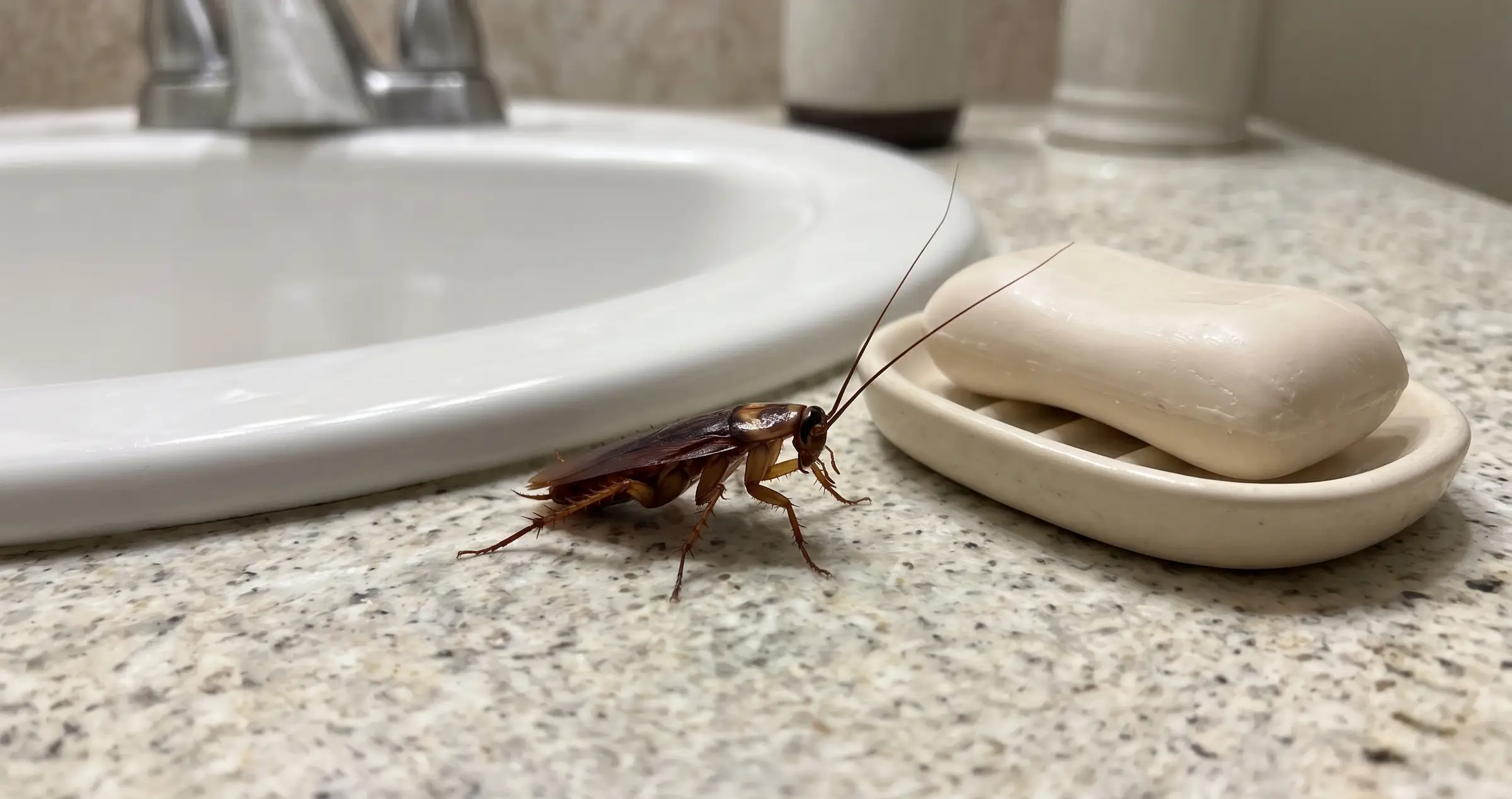
Discovering a cockroach inside your South Florida home or business can instantly trigger stress, frustration, and a strong sense of unease. Whether you live near the coast in Pompano Beach, a quiet residential neighborhood in Boynton Beach, or anywhere across Broward and Palm Beach counties, running into one of these roach species is an unpleasant experience.
7 Common South Florida Cockroaches (Jump to a Species for More Information):
- German cockroach
- Brown banded cockroach
- American cockroach
- Smokybrown cockroach
- Australian cockroach
- Asian cockroach
- Florida wood cockroach
Which Species of South Florida Cockroach Are You Seeing?
The good news is there is a silver lining to catching a glimpse of a pest or discovering evidence of their presence: you now have visual proof, which means you can take action before a minor nuisance turns into a severe infestation. Spotting the signs allows you to pinpoint the exact issue and start formulating a targeted plan to protect your space.
Key Takeaways:
- Identifying the specific pest is the single most critical factor in determining whether an insect requires aggressive indoor eradication or simple perimeter exclusion.
- The warm, humid climate of the coastal Broward/Palm Beach region supports several distinct cockroach species ranging from severe indoor breeders to harmless accidental invaders.
- Nesting species like the German cockroach pose the highest threat to structures, where even a single daytime sighting signals an established hidden colony.
- Outdoor insects frequently enter homes seeking moisture or drawn by artificial lighting, making structural sealing and perimeter vegetation management highly effective defenses.
- Conventional DIY extermination techniques like aerosol foggers often backfire against nesting cockroaches by scattering colonies deeper into wall cavities and inaccessible spaces.
Step 1: Identify Which Roach Species You Have
Cockroaches love warmth and moisture. Our humid coastal environment creates an ideal haven for several distinct species. Use this quick-reference guide alongside our species illustration to identify what you are seeing in your Pompano Beach home or business.
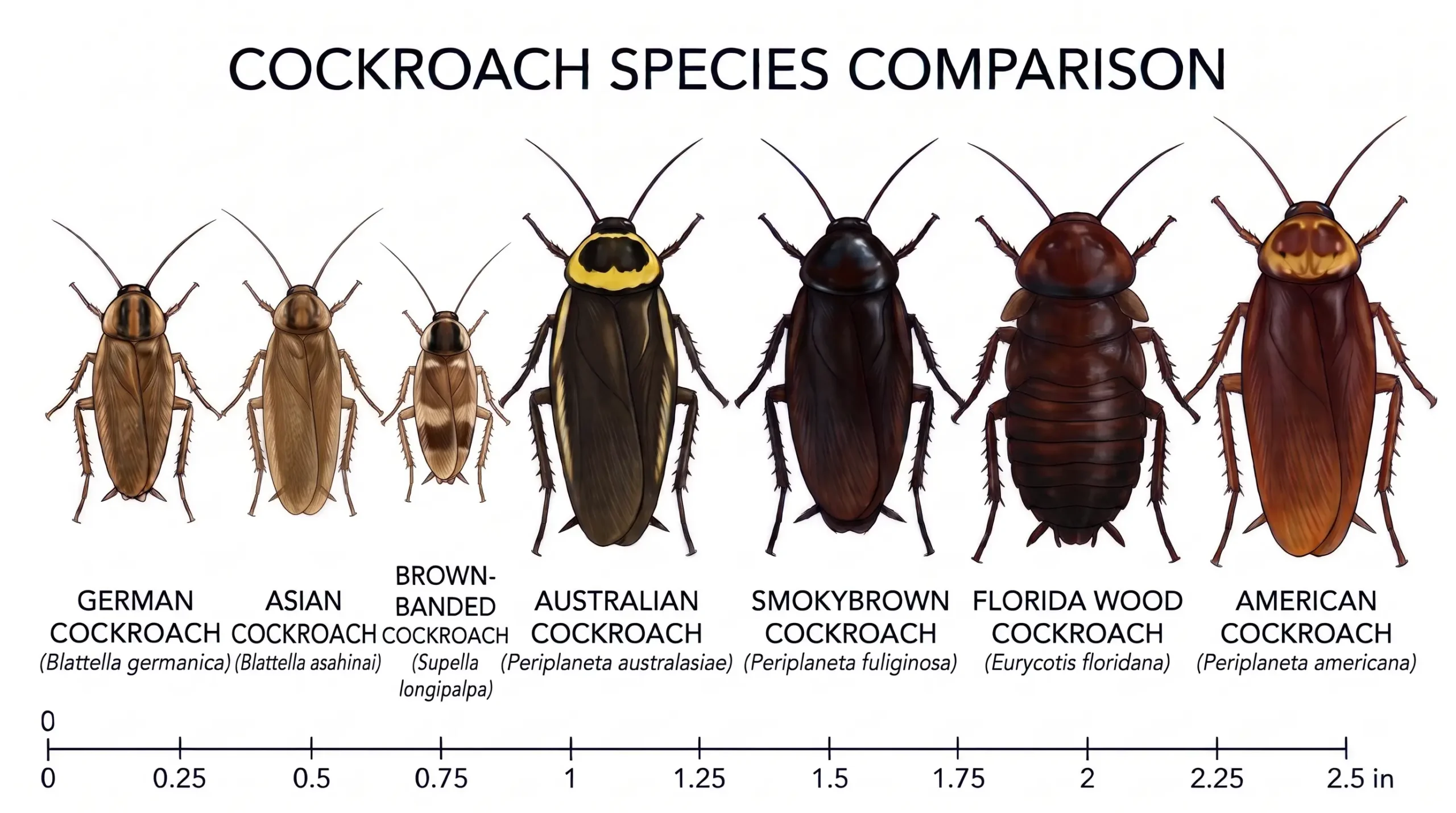
| Species | Appearance | Wings / Flight | Preferred Habitat | Threat Level & Impact |
| German Cockroach | 1/2″ – 5/8″; tan with 2 dark neck stripes | Fully winged, rarely fly | Kitchens, bathrooms, appliances, plumbing | CRITICAL (10/10): Aggressive indoor breeders that multiply rapidly behind walls, contaminating living spaces and triggering severe anxiety. |
| Brown-banded Cockroach | 1/2″; dark brown with yellow V-bands | Males fly short distances; females cannot | Upper cabinets, dry closets, warm electronics | SEVERE (9/10): Insidious indoor nesters that quietly colonize bedrooms, high shelving, and electronics without warning. |
| American Cockroach | 1.5″ – 2″+; reddish-brown, yellow thorax ring | Fully winged; glides from heights | Drains, sewers, mulch beds, attics | MODERATE-HIGH (7/10): Shocking size and sudden indoor appearances seeking moisture leave homeowners feeling completely invaded. |
| Smokybrown Cockroach | 1.25″ – 1.5″; solid dark mahogany | Strong fliers toward lights | Tree hollows, attics, roof lines, soffits | MODERATE (6/10): Disquieting nocturnal fliers drawn to interior lights that invade through attics and rooflines. |
| Australian Cockroach | 1.25″ – 1.5″; reddish-brown with yellow wing streaks | Strong fliers in warm weather | Landscaping, mulch, greenhouses | LOW-MODERATE (5/10): Unsettling garden wanderers that occasionally stray indoors, causing momentary panic. |
| Asian Cockroach | 1/2″ – 5/8″; tan with 2 dark stripes (German twin) | Strong, active fliers drawn to light | Shaded lawns, leaf litter, garden beds | LOW (3/10): Jarring nighttime fliers that head straight for TV screens or lamps, but harmless outdoor strays that cannot nest inside. |
| Florida Wood Cockroach | 1.25″ – 1.75″; broad, thick dark brown/black body | Completely wingless/flightless | Rotting logs, palmetto fronds, mulch | VERY LOW (2/10): Intimidating size and foul defense odor trigger instant recoil, but dies quickly indoors without nesting. |
Dealing with a cockroach infestation in your South Florida home? Reach out to the experienced roach exterminators at Petri Pest Control Services, Inc. today and schedule a free in-home inspection.
Step 2: Create a Plan Based on Your Specific Threat
Not every sighting demands the exact same response. Outdoor invaders drifting through an open doorway require a completely different strategy than nest-building indoor pests. Here is what you need to know about each resident species in our region, along with practical steps to address them.
German Cockroach (Blattella germanica)
The German cockroach is the single most concerning indoor pest across Pompano Beach, Boynton Beach, and the surrounding areas. Unlike outdoor species that enter homes by accident, these aggressive pests live almost exclusively indoors alongside human structures. They reproduce exponentially, with a single female producing hundreds of offspring in a matter of months.
- What finding one means: Seeing even one German roach during the day strongly indicates a hidden, established infestation nearby inside cabinetry, walls, or electrical appliances.
- What you should do next: Avoid using off-the-shelf aerosol foggers, which disperse the colony deeper into wall cavities. Immediately clean all food crumbs, seal grease sources, and contact professional exterminators for targeted baiting and growth regulator treatments.
- How to prevent them next time: Inspect cardboard shipping boxes, grocery bags, and second-hand appliances before bringing them inside. Ensure counter spaces and sinks remain completely dry overnight.
Brown-banded Cockroach (Supella longipalpa)
While less widespread across South Florida than the German cockroach, the Brown-banded cockroach is another true domestic cockroach that lives exclusively inside human buildings. Instead of seeking high-humidity plumbing areas, these small roaches prefer warmer, drier, and higher locations in homes and commercial properties from West Palm Beach down to Fort Lauderdale.
- What finding one means: Finding a Brown-banded roach indicates an active indoor breeding colony established in non-traditional areas, such as upper cabinetry, closet shelving, light switch plates, or inside electronic motor housings.
- What you should do next: Inspect elevated surfaces and warm electronic devices throughout living areas and bedrooms, not just kitchens and bathrooms. Place professional gel baits near high-level harborages.
- How to prevent them next time: Carefully inspect second-hand furniture, electronics, and storage boxes before placing them inside your home, and minimize dry clutter on closet shelves and high cabinets.
American Cockroach (Periplaneta americana)
Often referred to locally as “palmetto bugs,” these large, fast-moving insects are common throughout our region. They thrive in damp, warm environments like storm drains, sewer systems, and thick garden mulch. While they prefer outdoor habitats, heavy rains or extreme summer heat often drive them into homes through drains, crawlspaces, and door sweeps.
- What finding one means: A single sighting usually means an outdoor pest entered searching for water, shelter, or cooler air, though multiple sightings suggest a gap around pipe penetrations or utility lines.
- What you should do next: Inspect under sinks and around appliances for plumbing leaks. Check windows and exterior doors for worn weatherstripping or gaps.
- How to prevent them next time: Keep drain covers closed when not in use, seal exterior pipe entries with silicone caulk, and pull thick mulch back at least 12 inches from your foundation wall.
Smokybrown Cockroach (Periplaneta fuliginosa)
Recognizable by their deep mahogany hue, these pests lose moisture quickly and must remain near humid environments. In local residential neighborhoods, they commonly inhabit oak tree hollows, rain gutters, soffits, and thick roof ivy. Because they are strong fliers attracted to interior lighting, they frequently enter through attic vents and eaves.
- What finding one means: The insect likely flew in from an elevated outdoor roosting site, such as an overhanging tree branch or clogged rain gutter.
- What you should do next: Clean out rain gutters to eliminate standing moisture and decaying organic material. Inspect attic vents to ensure wire mesh screening is intact.
- How to prevent them next time: Trim tree branches back so they do not touch rooflines, and position outdoor night lighting away from entryways.
Australian Cockroach (Periplaneta australasiae)
Although similar in size and shape to the American roach, Australian cockroaches can be distinguished by the pale yellow stripes on the outer edges of its upper wings and a bright ring around its head shield. They feed primarily on plant matter and organic debris, making lush regional gardens and landscaped yards ideal habitats.
- What finding one means: It wandered indoors accidentally from adjacent landscaping or potted patio plants.
- What you should do next: Check indoor potted plants for soil moisture and hidden insects. Vacuum up any stray insects and discard the bag outside.
- How to prevent them next time: Maintain a tidy garden area around your perimeter, avoid overwatering landscape beds, and ensure door thresholds seal tightly against the floor.
Asian Cockroach (Blattella asahinai)
Asian roaches are almost identical in physical appearance to German cockroaches, featuring the same size and dark back stripes. However, their behavior is completely different: Asian roaches are outdoor insects that live in shady grass and leaf litter. They are powerful fliers that are highly attracted to bright lights at night, often fluttering inside through opened doors or windows.
- What finding one means: An outdoor insect flew toward your window or interior lighting; it is not attempting to nest inside your home.
- What you should do next: Turn off interior lights or close blinds at dusk to avoid attracting them. Verify that window screens are tight-fitting and free of tears.
- How to prevent them next time: Swap bright white exterior floodlights for yellow bug lights or LED fixtures that emit wavelengths less attractive to flying pests.
Florida Wood Cockroach (Eurycotis floridana)
Also known as the “stinkroach” or “palmetto bug,” this native species is broad, dark, and wingless. When threatened, it can emit a foul-smelling liquid to deter predators. These crawling pests depend on high moisture levels and decaying vegetation to survive, meaning they die quickly in the air-conditioned, low-humidity environment of a typical home.
- What finding one means: An accidental entry occurred, likely carried inside hidden within firewood, outdoor furniture, or leaf pile debris.
- What you should do next: Carefully remove the insect using a dustpan or vacuum. Avoid crushing it indoors to prevent releasing its defense odor.
- How to prevent them next time: Elevate firewood piles off the ground away from the house, sweep fallen palm fronds away from entry points, and seal ground-level wall gaps.
Not Seeing Cockroaches but Suspect an Infestation? Here Are the Signs
If you haven’t seen any cockroaches, but suspect an active infestation in your structure, you might notice one or several of these common warning signs:
- Shed skins or egg cases: Translucent brown exoskeletons left behind during molting, or pill-shaped egg capsules (oothecae) tucked into dark corners, cabinet hinges, or pantries.
- Droppings: Small specs that resemble black pepper or coffee grounds in drawers and behind appliances (typical of smaller species), or cylindrical pellets with ridged sides (typical of larger species).
- Smear marks: Dark, irregular streaks left along walls, baseboards, or floor corners in damp areas like kitchens, bathrooms, and laundry rooms.
- Musty odor: A distinct, oily, or unpleasantly pungent smell that intensifies as pest numbers grow.
- Chewed materials: Damage to cardboard boxes, paper packaging, wallpaper, or food containers stored in pantries.
Frequently Asked Questions About Cockroach Identification
Navigating pest issues in our humid climate often brings up specific questions about habits, health risks, and the most effective extermination techniques. Here are answers to common questions homeowners in Pompano Beach, Boynton Beach, and surrounding communities ask when dealing with active insects.
Protect Your Home with South Florida’s Trusted Cockroach Exterminators
Whether you are dealing with a sudden invasion of large palmetto bugs after a storm or battling a hidden colony of German roaches in your kitchen, attempting to handle a complex infestation with store-bought sprays often compounds the problem. Subtropical pest pressure requires deep regional knowledge, precise species identification, and targeted extermination techniques designed specifically for our coastal climate.
At Petri Pest Control Services, Inc., we are recognized as the premier local authority in cockroach control across Palm Beach and Broward counties. From suburban family homes in Coral Springs, Parkland, and Plantation to commercial properties and high-rise condos in Tamarac, Margate, Sunrise, Coconut Creek, and Lake Worth, our licensed exterminators bring decades of hands-on expertise to every property we protect.
We don’t rely on generic chemical treatments or temporary fixes. Our team executes comprehensive, multi-step eradication protocols utilizing advanced Insect Growth Regulators (IGRs), non-repellent transfer barriers, and precision gel baiting to neutralize colonies at their source—ensuring long-term protection for your family, pets, and property.
Don’t let a minor pest sighting turn into a costly indoor emergency. If you suspect cockroach activity in your home or business, contact the expert cockroach exterminators at Petri Pest Control. Reach out today to schedule your comprehensive pest control inspection in South Florida and take back your space!
Back to Cockroach Pest Control