
What Do Termites Look Like? Signs & Identification
Serving Pompano Beach, Boynton Beach, and surrounding areas
Think you may have spotted a termite? Termites are often confused with flying ants and other small insects, making professional identification especially important when you notice suspicious activity around your home.
Termites often remain hidden inside wood, soil, walls, and other structural areas. In many cases, homeowners notice the evidence they leave behind before seeing the termites themselves.
In this guide, we’ll explain what termites look like, how drywood and subterranean termites differ, and the common signs that may indicate an infestation.
How to Identify a Termite
Termite appearance varies depending on the species and the termite’s role within the colony. Workers are generally pale and soft-bodied, while soldiers have larger, darker heads. Reproductive termites, also called swarmers or alates, have wings and are often darker in color.
Two major termite groups that affect South Florida homes are subterranean termites and drywood termites.
Subterranean Termites
Subterranean termites typically live in the soil and travel between their colony and food sources through protective mud tubes. Workers are pale and soft-bodied, while soldiers have larger heads and prominent mandibles.
Common identification clues include:
- Pale or cream-colored workers
- Soldiers with larger, darker heads and visible mandibles
- Winged swarmers that may range from brown to dark in color depending on the species
- Mud tubes along foundations, walls, piers, or other surfaces
- Wood damage that may remain hidden beneath the surface
Drywood Termites
Drywood termites live directly inside the dry wood they infest and do not require contact with the soil. They may infest structural wood, attic framing, trim, furniture, and other wooden materials.
Common identification clues include:
- Pale workers that remain hidden inside infested wood
- Soldiers with larger heads and visible mandibles
- Winged swarmers, which may be noticed around windows or lights
- Small kick-out holes in infested wood
- Six-sided fecal pellets, called frass, collecting beneath infested areas
Signs You Might Have Termites
Because termites often remain hidden, signs around the property may be easier to spot than the insects themselves. Common signs of termite activity include:
- Discarded wings or termite swarmers: Winged reproductive termites may emerge from an established colony and shed their wings after swarming.
- Termite droppings (frass): Drywood termites push small, hard pellets through kick-out holes in infested wood.
- Mud tubes: Subterranean termites construct narrow mud tubes to travel between the soil and food sources above ground.
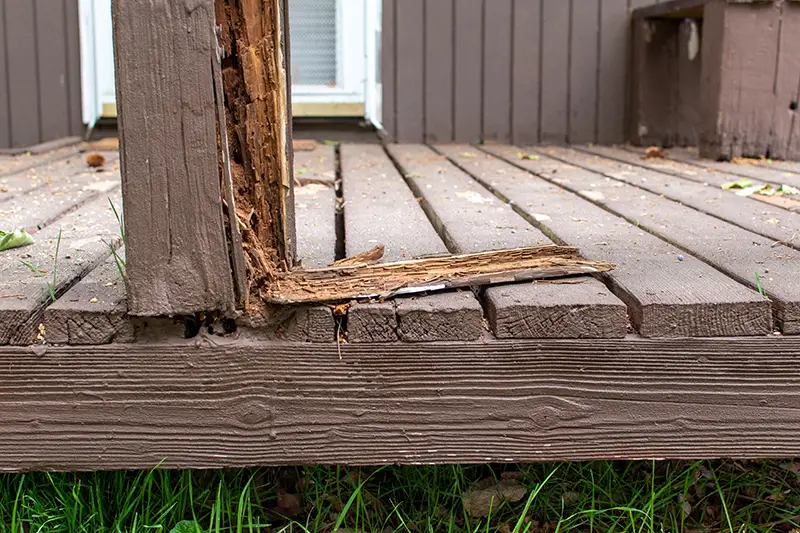
- Damaged or hollow-sounding wood: Internal termite galleries can weaken wood while leaving the exterior surface relatively intact.
- Blistered or uneven wood surfaces: Termite galleries located close to the surface can sometimes create a blistered appearance.
- Small holes in wood: Drywood termites may create tiny openings used to push frass from their galleries.
- Doors or windows that begin sticking: Changes to damaged wood around frames may sometimes affect how doors or windows operate.
- Visible structural damage: More extensive infestations may result in weakened or visibly damaged wood.
If you notice one or more of these signs, professional termite control begins with properly identifying the termite species and extent of activity.

How to Tell Termites From Flying Ants
Winged termites are commonly mistaken for flying ants. A few physical differences can help tell them apart:
- Antennae: Termites have relatively straight antennae, while ants have elbowed antennae.
- Wings: Termites have two pairs of wings that are approximately equal in length. Ants have larger front wings and smaller hind wings.
- Waist: Termites have a broad or thick waist, while ants have a noticeably narrow waist.
What Does a Termite Swarm Look Like?
Termite swarmers are winged reproductive members of a mature colony. Swarming occurs at different times depending on the termite species, weather, and environmental conditions.
You may notice numerous winged insects around windows, doors, exterior lights, or other areas. After a swarm, piles of discarded wings may remain on window sills, floors, or even in spider webs.
Finding swarmers indoors or discovering piles of shed wings is a good reason to schedule a professional termite inspection.
What Do Termites Look Like at Different Life Stages?
Termite colonies contain several different forms, each with a specific role.
Termite Eggs
Termite eggs are extremely small and usually remain protected inside the colony, making them unlikely to be noticed by homeowners.
Young Termites
Young termites are pale, soft-bodied, and resemble smaller versions of adults as they develop into different colony roles.
Worker Termites
Workers are typically pale or cream-colored and are responsible for feeding, maintaining the colony, and damaging wood as they forage for cellulose.
Soldier Termites
Soldiers defend the colony. They generally have larger, darker heads and more prominent mandibles than workers, although their exact appearance varies by species.
Reproductive Termites (Swarmers)
Reproductive termites, also known as alates or swarmers, have wings and are responsible for leaving established colonies to begin new ones. Their coloration varies by species, but they are typically darker than workers.
Not Sure If You’ve Found Termites?
Termite species and other insects can be difficult to identify without experience, and the correct identification matters because drywood and subterranean termites require different control methods.
Petri Pest Control provides professional termite inspections throughout Broward & Palm Beach Counties, FL. Our technicians can evaluate suspicious activity, identify signs of termites, and recommend appropriate next steps based on what they find.
Contact Petri Pest Control today to schedule your free termite inspection.
Back to Termite Control