
What Kills Fleas And Their Eggs?
Serving Pompano Beach, Boynton Beach, and surrounding areas
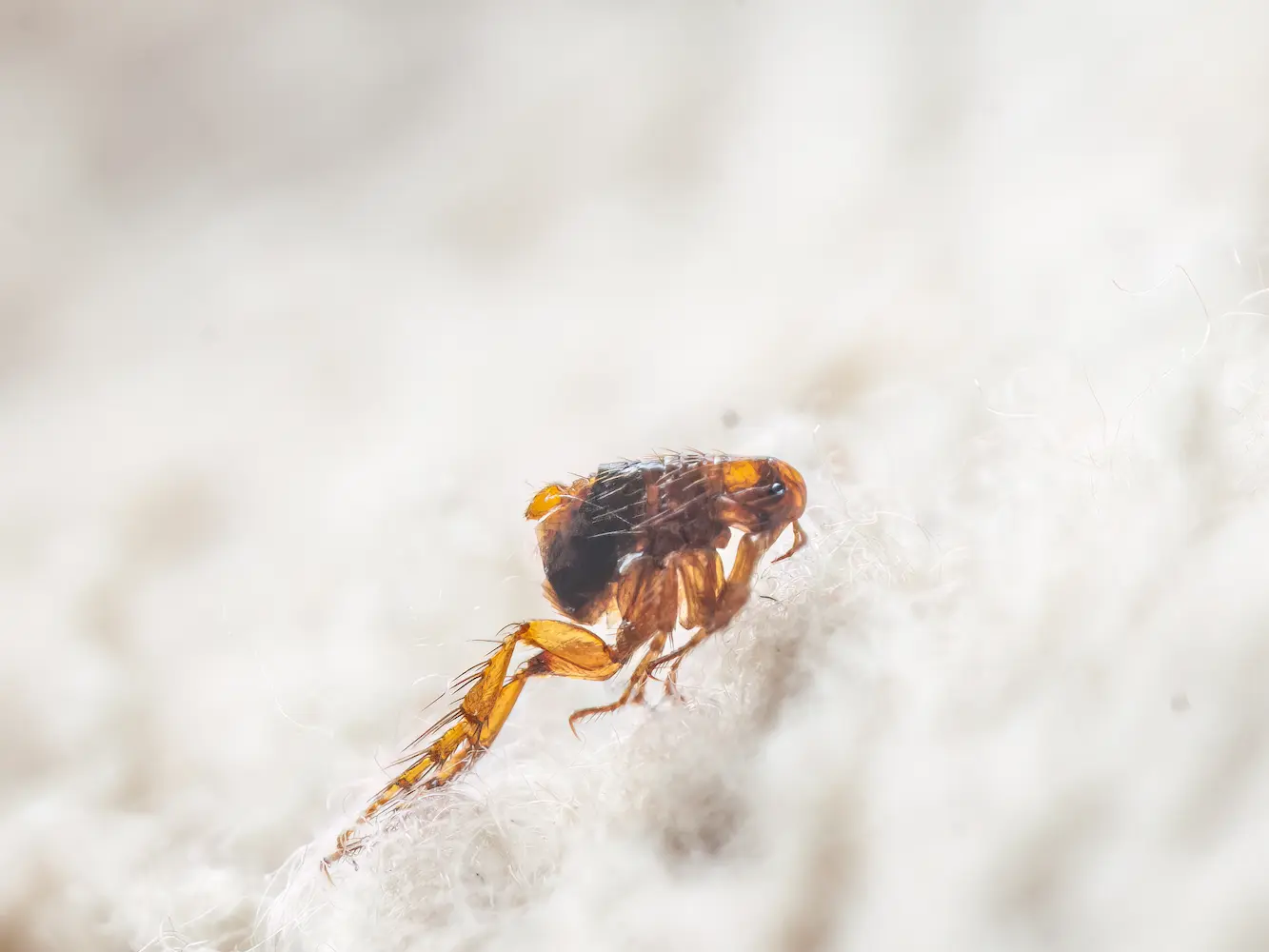
Eliminating a flea infestation in its entirety requires a two-pronged approach: fast-acting treatments that kill live, biting adult fleas, and reproductive inhibitors that destroy hidden eggs and larvae before they can mature. South Florida’s warm, high-humidity climate provides ideal year-round breeding conditions, allowing flea populations to explode quickly. Adult fleas account for only 5% of a total infestation in your home, while the remaining 95% exists as invisible eggs, larvae, and pupae scattered in your carpets, furniture, and pet bedding.
Successfully wiping out all four stages of the flea life cycle requires a combination of high-heat laundering, deep mechanical cleaning, and targeted chemical treatments that break the reproductive cycle both on your pets and throughout your living space.
Key Takeaways:
- Eliminating a flea infestation requires targeting hidden eggs, larvae, and pupae, which make up 95% of the total population.
- Successful flea control relies on a simultaneous, two-pronged strategy that treats both host pets and their surrounding environment.
- Combining high-heat washing, deep mechanical cleaning, and targeted chemical treatments is necessary to break every stage of the flea life cycle.
- Insect Growth Regulators play a crucial role in long-term control by preventing immature fleas from developing into reproducing adults.
- Total eradication often takes several weeks because dormant pupae in protective cocoons must hatch before chemical treatments can eliminate them.
Click below to contact Petri Pest Control for a FREE pest control quote. Start With A Quote On Us
How to Eradicate Fleas in Your Home: A Step by Step Plan
Step 1: Treat All Household Pets (Crucial First Step)
Environmental treatments will fail if your pets remain untreated host source targets.
- Consult a Veterinarian: Obtain an oral fast-acting adulticide (e.g., nitenpyram) for immediate adult knockdown relief. Pair this with a long-term preventive regimen—either oral chewables (e.g., fluralaner, afoxolaner) or topical spot-on treatments (e.g., imidacloprid or selamectin)—to maintain continuous protection.
- Flea-Comb Daily: Dip a fine-toothed flea comb in warm, soapy water after every stroke to trap and kill live adult fleas and remove flea dirt (feces).
- Never Use Environmental Sprays on Animals: Apply treatments labeled exclusively for pet use.
Step 2: Heat-Treat and Wash All Fabrics
Fleas at all stages of development die when exposed to temperatures above 120°F for at least 20 minutes.
- Launder Bedding: Strip pet bedding, human bedding, throw blankets, and washable rugs. Wash them using hot water and dry on high heat for a minimum of 30 minutes.
- Isolate Clean Items: Bag cleaned fabrics in sealed plastic bags until the rest of the living space is fully treated.
Step 3: Deep Vacuum and Steam Clean
Mechanical removal disrupts the pest life cycle and stimulates dormant pupae to emerge into treated zones.
- Vacuum Thoroughly: Target high-traffic pet zones, carpets, upholstered furniture, under furniture, and along baseboard crevices. For best results, check out our tips for getting fleas out of your carpet.
- Dispose of Waste Immediately: Empty canister vacuums into a sealed trash bag outdoors, or seal and throw away disposable vacuum bags right away so trapped fleas cannot crawl back out.
- Steam Clean Fabrics & Sealed Surfaces: Use a steam cleaner reaching at least 150°F on carpets, upholstered furniture, and tiled or grouted areas to kill unhatched eggs and larvae hidden deep within fibers.
Caution: Avoid applying high-temperature steam directly to unsealed hardwood, laminate, or delicate floor finishes, as excessive heat and moisture can cause warping or sealant damage.
Step 4: Apply Target Indoor Chemical Treatments
Combine rapid-knockdown adulticides with long-acting IGRs to disrupt the life cycle across all development stages.
- Use IGRs + Residual Sprays: Apply spot treatments containing an IGR (such as pyriproxyfen, methoprene, or hydroprene) alongside a residual adulticide in cracks, baseboards, and carpeted zones.
- Focus on Hidden Areas: Pay special attention to dark, protected areas under furniture, behind doors, and along room perimeters where larvae hide from light.
- Follow Re-Entry Safety Protocols: Keep pets and family members out of treated rooms until sprays are completely dry (typically 2 to 4 hours).
Step 5: Treat Outdoor Resting Zones
Outdoor areas host wildlife or roaming animals that can continuously reintroduce fleas to your yard.
- Target Shade and Moisture: Focus outdoor insecticide broadcast applications on shaded areas, moist soil, under decks, and along pet paths. Avoid sunny, exposed lawn areas where flea larvae cannot survive drying heat. In coastal Broward County homes, shaded sandy soils near building foundations offer prime harboring conditions year-round.
- Integrate Biological Controls: For an eco-conscious alternative or addition to chemical sprays, apply beneficial nematodes (Steinernema carpocapsae) to shaded, moist soil. These microscopic organisms actively hunt and parasitize flea larvae and pupae in the soil without harming plants, pets, or beneficial garden insects.
- Mow and Clear Debris: Keep grass short and remove leaf litter, woodpiles, and overgrown brush to eliminate dark, humid breeding environments.
- Observe Outdoor Re-Entry Protocols: Keep pets and children off treated lawn areas and soil until chemical sprays have dried completely (typically 2 to 4 hours post-application) to prevent accidental topical absorption or ingestion.
Step 6: Maintain Continuous Treatment for 3 to 4 Weeks
Pupae encased in protective cocoons are naturally resistant to chemical sprays and can delay hatching for weeks.
- Vacuum Daily: Daily vacuuming creates heat, pressure, and vibrations that encourage pupae to hatch, forcing newly emerged fleas into contact with your residual chemical treatments.
- Reapply as Directed: Reapply IGR treatments at 2 to 4 week intervals if residual populations persist, until no signs of adult fleas or flea dirt remain.

What are IGRs and How Do They Work?
While fast-acting sprays eliminate biting adults, Insect Growth Regulators (IGRs) are required to stop immature eggs, larvae, and pupae from maturing. These specialized compounds disrupt the reproductive and physical development cycles of fleas by mimicking natural juvenile hormones, stopping unhatched eggs from developing and preventing larvae from molting into adults.
The most common active ingredients in professional-grade IGRs are methoprene, hydroprene, and pyriproxyfen. Applied as indoor surface sprays, space treatments, or spot applications in cracks and crevices, these compounds retain active residual protection for up to six months—an essential safeguard in sub-tropical climates like Pompano Beach and Boynton Beach where fleas remain active outdoors every month of the year.
How Long After Treatment Do Fleas Die?
It is common to see live fleas for up to four weeks after an initial chemical application. This does not mean the treatment has failed; rather, it reflects the natural progression of pupae hatching out of protective cocoons that sprays cannot penetrate.
- Immediate Knockdown: Adulticides eliminate active adult fleas within hours of exposure.
- Residual Defense: As hidden eggs and pupae mature and emerge over the following weeks, residual chemical deposits kill them before they can reproduce.
- Vibration Stimulation: Regular vacuuming mimics host movement, prompting dormant pupae to hatch faster and move directly across treated surfaces.
DIY Flea Control Home Remedies – Do They Work?
Home remedies might offer temporary relief, but relying on natural treatments alone won’t break the flea life cycle. Here is the reality behind six common DIY flea controls:
- Cedar & Wax Myrtle:Â Aromatic oils mildly repel adult fleas, but lack the strength to kill eggs, larvae, or stop an active indoor infestation.
- Diatomaceous Earth & Boric Acid:Â These powders desiccate adult fleas on contact, but they pose inhalation risks, damage vacuum motors, and fail to disrupt the reproductive cycle like targeted IGRs.
- Dish Soap & Water Traps:Â Useful for monitoring adult activity, but soap traps catch only a small percentage of biting adults and cannot affect hidden eggs, larvae, or pupae.
- Apple Cider Vinegar:Â Vinegar acts as a temporary behavioral repellent due to its acidity, but it does not kill fleas at any development stage.
- Table Salt: While salt can absorb moisture from carpet fibers, ambient humidity—especially in South Florida—renders it ineffective for desiccation while leaving damaging residue behind.
- Essential Oils:Â Diluted oils lack the potency needed to eliminate an infestation, and common options like tea tree and eucalyptus are toxic to pets if absorbed or ingested.
For persistent infestations, pairing professional-grade treatments with systematic home cleaning offers the fastest path to eradication. If you are dealing with an outbreak in Pompano Beach or Boynton Beach, contact Petri Pest Control Services, Inc. for targeted solutions.
Getting ready for professional service? Here’s how to prep your home for flea control to ensure you get the best possible results.
FAQs About Killing Fleas
While following a systematic eradication plan will address the core of an outbreak, specific scenarios—like vehicle contamination or persistent egg dormancy—often require tailored answers to ensure complete long-term control. Below are solutions to the most common questions homeowners face during the eradication process.
Q. How long can flea eggs remain dormant before hatching in a home environment?
Flea eggs themselves generally do not remain dormant long-term—they hatch within 2 to 14 days under normal household conditions.
The confusion around long-term dormancy usually stems from the pupal stage (the cocoon stage that follows the egg and larval stages). While eggs hatch quickly, flea pupae can remain completely dormant inside protective cocoons for several months to over a year if temperature, humidity, or host activity levels are low. They only hatch when they detect carbon dioxide, body heat, or physical vibrations from a nearby host.
Q. What specific steps should be taken to clean car interiors if a pet traveled in the vehicle during an infestation?
Treating your car requires the same rigorous approach as treating your living space to prevent re-infesting your home or pets:
- Remove and Launder Fabric Items:Â Remove all floor mats, seat covers, and pet blankets. Wash them in hot water and dry on high heat for at least 30 minutes.
- Vacuum Thoroughly:Â Vacuum all upholstery, carpeted floors, trunk spaces, and tight seat crevices where eggs and larvae fall. Pay close attention to seams and under seat cushions. Immediately seal and discard the vacuum contents outside in a trash bin.
- Steam Clean Upholstery: Use a portable carpet or steam cleaner reaching at least 150°F to heat-treat fabric seats and floor carpeting, destroying unhatched eggs and larvae hidden deep in fibers.
- Apply a Vehicle-Safe Spray with IGR:Â Treat floorboards, carpet seams, and fabric crevices with a pet-safe indoor flea spray containing an Insect Growth Regulator (IGR). Avoid spraying electronics or dashboard controls, and allow the vehicle to ventilate completely before letting pets or passengers inside.
Q. How does a homeowner test if a flea infestation has been fully eradicated versus just temporarily suppressed?
To confirm complete eradication rather than temporary suppression, perform these simple diagnostic tests:
- The White Sock Test:Â Put on a pair of white, knee-high socks and slowly walk around carpeted areas, pet sleeping zones, and low-light corners while shuffling your feet. The body heat and motion will draw out any newly emerged adult fleas, making them immediately visible against the white fabric.
- Flea Traps:Â Set up overnight sticky flea traps (which use a small bulb or heat source positioned over a sticky sheet) in high-traffic pet areas. If the trap remains completely clear for 3 to 4 consecutive weeks, the active reproductive cycle has ended.
- Regular Flea Combing:Â Comb all household pets daily using a fine-toothed flea comb. Watch closely for live fleas or “flea dirt” (small black specs that turn red when wiped on a damp white paper towel).
If 4 full weeks pass with zero signs on socks, traps, or pets, the infestation is successfully eradicated.
Q. Is it necessary to treat indoor-only pets if another pet in the house goes outdoors?
Yes, absolutely. If one pet goes outdoors, every pet in the household must be placed on a veterinarian-recommended flea preventive.
Fleas do not stay localized to a single animal. An outdoor pet will bring fleas or flea eggs into the home, where eggs fall off into carpets and furniture. Once those eggs hatch into adults, they actively seek any available warm-blooded host. If an indoor-only pet is untreated, it becomes an easy, unprotected reservoir for the infestation to sustain itself and flourish.
Q. At what point should a homeowner stop DIY efforts and hire a licensed professional pest control operator?
You should transition from DIY treatment to professional extermination when:
- Persistence Beyond 4–6 Weeks: You have consistently vacuumed, washed fabrics in high heat, and applied treatments, but still spot live adult fleas or new flea dirt after 4 to 6 weeks.
- Uncontrolled Environmental Re-Infestation: Crawl spaces, attics, or subfloor spaces harbor nesting wildlife (such as raccoons, opossums, or feral cats) that continuously drop fleas into the structure.
- Severe Allergic Reactions or Secondary Infections: Household pets or family members show signs of severe flea allergy dermatitis (hair loss, intense inflammation, open sores) or secondary skin infections requiring immediate medical relief alongside rapid pest elimination.
- Large or Complex Properties: The infestation spans multi-level carpeted homes, expansive furniture layouts, or heavy outdoor yard areas where consumer-grade equipment cannot achieve full chemical coverage.
Take Back Control with Professional Flea Control
Eliminating a flea infestation requires targeting both active adult biters and the 95% hiding as eggs, larvae, and pupae. Given South Florida’s warm, humid climate, breaking this cycle demands a consistent, multi-stage strategy that pairs pet protection and deep environmental cleaning with long-acting Insect Growth Regulators.
When persistent pupae or severe infestations require expert intervention, Petri Pest Control Services, Inc. delivers localized, targeted flea control treatments engineered specifically for South Florida homes. Call Petri Pest Control Services, Inc. or email us today to restore comfort, safety, and peace of mind to your home.
Back to Tick & Flea Exterminators