


Skip to content
Pest Facts

Flea Fact Sheet

Key Takeaway - Fleas

  • Fleas are tiny, wingless parasites that are more than just a nuisance for pets. They’re highly resilient, can quickly take over an entire household, and are more than happy to bite humans.
  • Their bites are notorious for causing more serious problems, from allergic dermatitis and intense itching to dangerous diseases and tapeworms.
  • A few hitchhiking fleas brought into the backyard by wildlife, stray animals, or even your pet, can lead to a full-blown infestation in a matter of days or weeks. Female fleas can lay up to 50 eggs per day, leaving larvae deep in your upholstery and carpet before you notice adults.
  • The warm, humid Florida climate allows fleas to thrive year-round. If you or your pets are experiencing unexplained bites or constant scratching, there’s a strong possibility you’re dealing with a flea infestation.

Table of Contents

What to Know About Fleas in South Florida

Fleas are a persistent threat throughout Boynton Beach, Pompano Beach, and South Florida. Unlike some pests that have a consistent seasonality, our tropical climate provides the perfect environment for fleas to survive and emerge at any time.

There’s a common misconception that fleas only affect “dirty” homes or pets. In reality, fleas are frequently introduce to pristine yards by local wildlife like raccoons, opossums, or stray cats. Once in your grass, it only takes one walk to the mailbox for fleas to jump on and latch to your clothes or your pet’s fur.

How Concerned Should You Be About Fleas (on a 1-10 Scale)?

1

2

3

4

5

6

7

8

9

10

About an 8. While they don’t cause structural damage like termites, the high rating reflects the level of physical discomfort they can cause plus the extreme difficulty of DIY flea control. Keep in mind – even if you’re seeing lots of fleas, up to 95% of the flea population in an area exists as developing eggs, larvae, and pupae.

Some risks of a flea infestation include:

  • Medical Issues: Flea bites can lead to secondary skin infections from scratching too much. In some cases, fleas can also transmit Bartonella (cat scratch disease) or Typhus.
  • Pet Health: They don’t just make pets uncomfortable. Heavy infestations can cause anemia in kittens and puppies and are the leading cause of tapeworms.
  • Super-Fast Life Cycle: They can lay hundreds of eggs in a week, which means your home can go from fine to infested faster than almost any other household pest.
  • High Resiliency: It’s difficult to kill fleas, especially pupae, which are encased in a protective shell that is resistant to common store-bought surface sprays.

Puppy Golden Retriever scratching fleas behind their head

How to Identify Fleas

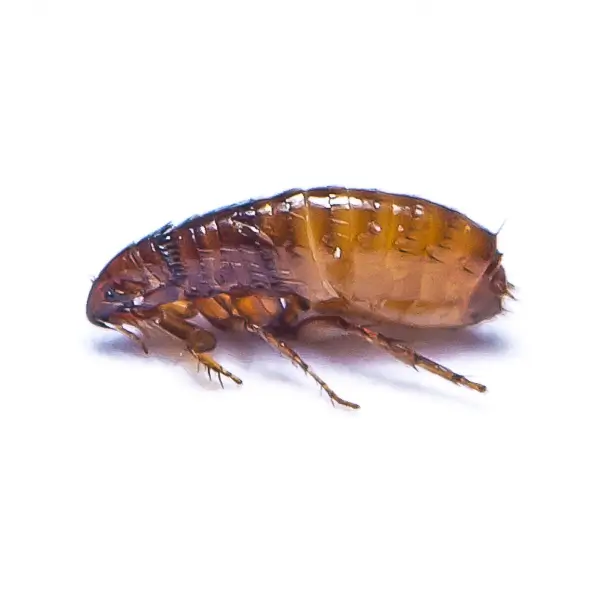
Fleas have been said to resemble “jumping pepper flakes.” They’re tiny (about 1.5 to 3 mm long) and reddish brown. They don’t fly, but they use their powerful legs to leap onto passing hosts.

Due to their minuscule size, with most flea infestations, you notice the evidence of their presence before you notice the actual fleas.

Be sure to keep your eyes open for these flea infestation warning signs:

  • “Flea Dirt”: It looks like dirt, but it’s actually flea excrement (essentially, digested blood). It appears as small black specks on your pet’s skin or bedding. If you place it on a wet paper towel, it will turn red.
  • Agitated Pets: Does it look like your pets are having a bad time? If so, they may have fleas. Look for excessive scratching, biting at the tail, scabs under their fur, or sensitive “hotspots” on the skin.
  • Bites on Human Skin: Flea bites look like small, red bumps. They are extremely itchy and often found around the ankles or lower legs.


How to Get Rid of Fleas

In order to end a flea infestation, you must treat it on multiple fronts at the same time. If your pet is infested, you must treat their fleas, while also treating the interior and exterior environments. If you don’t eliminate the fleas in all of these areas, you risk re-infestation.

Standard “bug bombs” and store-bought products are generally ineffective against fleas because they don’t penetrate the carpet fibers or deep within the upholstery where larvae are found. To eliminate fleas in your home, we recommend working with an experienced flea exterminator.

Can You Prevent Fleas?

It’s difficult to eliminate fleas entirely, because as soon as you do, it’s entirely possible some flea-ridden wildlife comes back on your property, fleas jump off, and the cycle begins anew. However, you can lower your risk by following these steps:

  • Keep Up with Yard Maintenance: Mow your grass short regularly and don’t let leaf litter accumulate. These are prime harborage spots for fleas.
  • Don’t Forget Pet Maintenance: Put your pets on a year-round flea and tick preventative if necessary.
  • Vacuum Often: Frequent high-powered vacuuming of carpets and rugs can remove up to 90% of flea eggs. Be sure to empty the vacuum canister or bag immediately – into an outdoor trash can.
  • Prevent Wildlife: Make your space unappealing to wildlife like raccoons, opossums, and rodents. Seal up crawl spaces and decks so they can’t get in.

Call Petri Pest Control Services, Inc. for Flea Control in Pompano Beach

A flea infestation can turn into an exhausting cycle of cleaning and itching and cleaning some more, but the good news is you don’t have to deal with it alone. At Petri Pest Control Services, Inc., we specialize in flea control in Pompano Beach that breaks the flea life cycle for good.

Here’s how our professional flea control works:

  • Inspection: We’ll identify hotspots in your home and yard where eggs and larvae are likely developing.
  • Targeted Treatments: We use specialized industry-best products that target adult fleas and their offspring.
  • Expert Recommendations: We’ll provide clear and actionable tips for how to create a custom long-term prevention plan for both you and your pets.

Ready to get started? Contact us today to reclaim your home from fleas and get your entire back to enjoying flea-free comfort!

Flea FAQs

You don’t need a cat or dog to have a flea problem – this is a common misconception. Fleas can be brought into your yard by local wildlife like squirrels, raccoons, or opossums. From there, they can hitch a ride on your clothing or jump through screen doors.

Additionally, if you recently moved into a new home, flea pupae from a previous tenant’s pet can remain dormant in the floorboards for months before “waking up” when they sense your presence.

While “human fleas” do exist, they are rare in North America. The common cat and dog fleas that plague South Florida homes do not live in human hair; they prefer the denser fur of animals. However, they will absolutely bite humans.

In many parts of the country, a hard frost will kill off outdoor flea populations. However, in Boynton Beach and Pompano Beach, our winters rarely get cold enough to provide a natural reset. And once fleas are inside your climate-controlled home, they can continue their life cycle 365 days a year regardless of the weather outside.

This is actually a known phenomenon. The heat and vibration from a vacuum cleaner mimic the movements of a host, which triggers “pre-emergent” fleas to break out of their cocoons. While this can be startling, it is actually a good thing, as it draws them out of their protective shells and exposes them to our professional treatments.

For most people, the primary danger is secondary infection caused by scratching the itchy welts. However, fleas are known vectors for several diseases and can transmit tapeworms if a pet (or curious toddler) accidentally ingests an infected flea. Some individuals and pets also suffer from Flea Allergy Dermatitis (FAD), where a single bite causes a massive, painful skin reaction.

Immediately wash all pet bedding in hot water and vacuum all upholstered surfaces. Contact Petri Pest Control Services, Inc. to schedule an inspection so we can implement a professional flea control strategy before the population doubles again.

Petri Pest Control services in South Florida
$50 Off Pest Control

Fill out the form below and a pest specialist will contact you shortly!