

Skip to content
Pest Facts

Daddy Long Legs Fact Sheet

Type: Spiders

Spider control by Petri Pest Control in South Florida

Key Takeaway - Daddy Long Legs

  • The term “daddy long legs” is commonly used to describe cellar spiders, a species known for its tiny body and extremely long, delicate legs. 
  • They are often confused with harvestmen, which are technically not true spiders, though they are closely related.
  • Daddy long legs spiders typically build loose, irregular webs in undisturbed indoor spaces and prefer dark, humid environments where other insects are present.
  • Although many homeowners are startled by their appearance, daddy long legs can actually be beneficial because they feed on insects, mites, and organic material that may otherwise become nuisance pests.

Table of Contents

What to Know About Daddy Long Legs Spiders in Florida

Daddy long legs spiders are extremely common throughout Florida, especially in warm, humid environments where other insects are readily available. You’re likely to encounter them around garages, patios, crawl spaces, storage sheds, and landscaping features. Their thin legs and slow, drifting movements make them one of the easiest arachnids to recognize both indoors and outdoors.

Florida properties offer the perfect hiding spots for these spiders, especially during long warm seasons. While many spiders rely on their webs to trap prey, daddy long legs are active hunters and scavengers. They’re often seen moving through dark corners and plants to search for insects and organic material.

Although they can look intimidating when spotted in large numbers, daddy long legs spiders are considered harmless and are often tolerated around homes because they help reduce the populations of nearby nuisance insects.

How Worried Should You Be About Daddy Long Legs? (On a 1-10 Scale)

1

2

3

4

5

6

7

8

9

10

About a 2. Daddy long legs are not considered dangerous and do not pose a significant threat to homeowners. They are not aggressive, rarely interact with people, and are more likely to flee than defend themselves.

That said, large populations indoors can become an annoyance, particularly when clusters form in garages, crawl spaces, storage areas, or ceilings.

Some common concerns associated with daddy long legs include:

  • Indoor Nuisances: Large groups can create an unpleasant appearance, especially when they gather in corners, crawl spaces, or outdoor structures.
  • Spider Misidentification: Many homeowners mistake daddy long legs for more concerning spider species, creating unnecessary alarm.
  • Underlying Pest Problems: Increased spider activity may indicate that other insects are present, since daddy long legs rely on insects and small arthropods as a food source.
  • Moisture Issues: Homes with persistent humidity, leaks, or poor ventilation often create ideal conditions for daddy long legs and other pests.

Closeup of daddy long legs spiders crawling across their web in a Florida residents basement.

How to Identify a Daddy Long Legs Spider

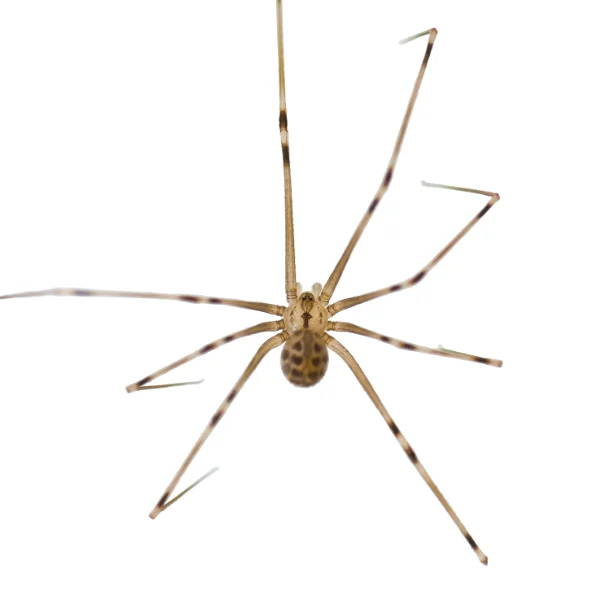
The most noticeable feature of a daddy long legs spider is, of course, its unusually long and delicate legs. Compared to its tiny body, the legs can appear dramatically oversized, giving the spider its distinct appearance.

These spiders are usually light tan, pale brown, or gray in color and have small rounded bodies without the thick abdomen seen on many other spider species. Their legs are highly sensitive and help them detect vibrations, navigate dark areas, and avoid predators.

One unusual trait is their tendency to gather together in clusters. In garages, crawl spaces, and shaded exterior areas, groups of daddy long legs may congregate closely together, forming large masses along ceilings or corners. While this behavior may seem alarming, it is simply a natural defense mechanism that helps keep predators away.


How to Get Rid of Daddy Long Legs

Daddy long legs are usually attracted by environmental conditions rather than homes in general. To reduce their presence, it’s important to address both their hiding areas and food sources:

  • Reducing Moisture: Repair leaks, improve ventilation, and reduce humidity levels in basements, crawl spaces, and storage areas.
  • Removing Clutter: Eliminate hiding places by organizing storage spaces and reducing debris.
  • Managing Insect Activity: Since daddy long legs feed on insects, controlling other pest populations reduces spider activity as well.
  • Sealing Entry Points: Close gaps around doors, windows, and foundation openings to limit access.

For larger infestations or recurring spider activity, professional spider control services can help identify contributing factors and provide targeted treatment solutions.

Can You Prevent Daddy Long Legs?

While it may not be possible to eliminate every daddy long legs spider around your property, there are several steps you can take to make your home less appealing to them.

  1. Control Moisture: Keep basements, crawl spaces, and garages dry whenever possible.
  2. Limit Insect Populations: Reducing the insects they feed on can help discourage spiders from settling nearby.
  3. Keep Areas Clean: Regularly remove webs, vacuum corners, and reduce clutter in storage spaces.
  4. Maintain Landscaping: Trim vegetation away from the home and reduce dense ground cover near foundations.
  5. Inspect Exterior Openings: Seal cracks, gaps, and openings that may allow pests to enter.

Call Petri Pest Control Services, Inc. for Spider Control Services

Although daddy long legs are generally harmless, large indoor populations can become frustrating and may signal conditions that are attracting other pests to your property.

If an infestation continues to grow indoors, professional pest control can help identify the cause and reduce the presence of both the spiders and the insects attracting them.

Petri Pest Control Services, Inc. offers professional spider identification and treatment solutions for homes dealing with recurring spider activity. If you’re seeing increased spider populations around your property, contact our team today.

Daddy Long Legs FAQs

Neither harvestmen or cellar spiders are considered dangerous to people or pets. They are not aggressive and rarely come into contact with humans intentionally. While cellar spiders do possess a venom used to subdue tiny prey, it is not medically significant to humans.

They are not aggressive and rarely come into contact with humans. Bites are extremely uncommon. If threatened, they may vibrate rapidly, retreat into hiding, or even shed a leg to escape.

Clustering helps protect them from predators and environmental conditions. Large groups are commonly found in humid, sheltered locations.

Moisture, insect activity, clutter, and dark hiding places are some of the most common attractants.

Yes. They feed on small insects, mites, and organic matter, which can help reduce certain nuisance pest populations.

Frequent sightings may indicate excess moisture or underlying insect activity. A professional inspection can help identify the cause and recommend solutions.

Petri Pest Control services in South Florida
$50 Off Pest Control

Fill out the form below and a pest specialist will contact you shortly!