
Why Are My Palm Tree Fronds Turning Brown?
Serving Pompano Beach, Boynton Beach, and surrounding areas
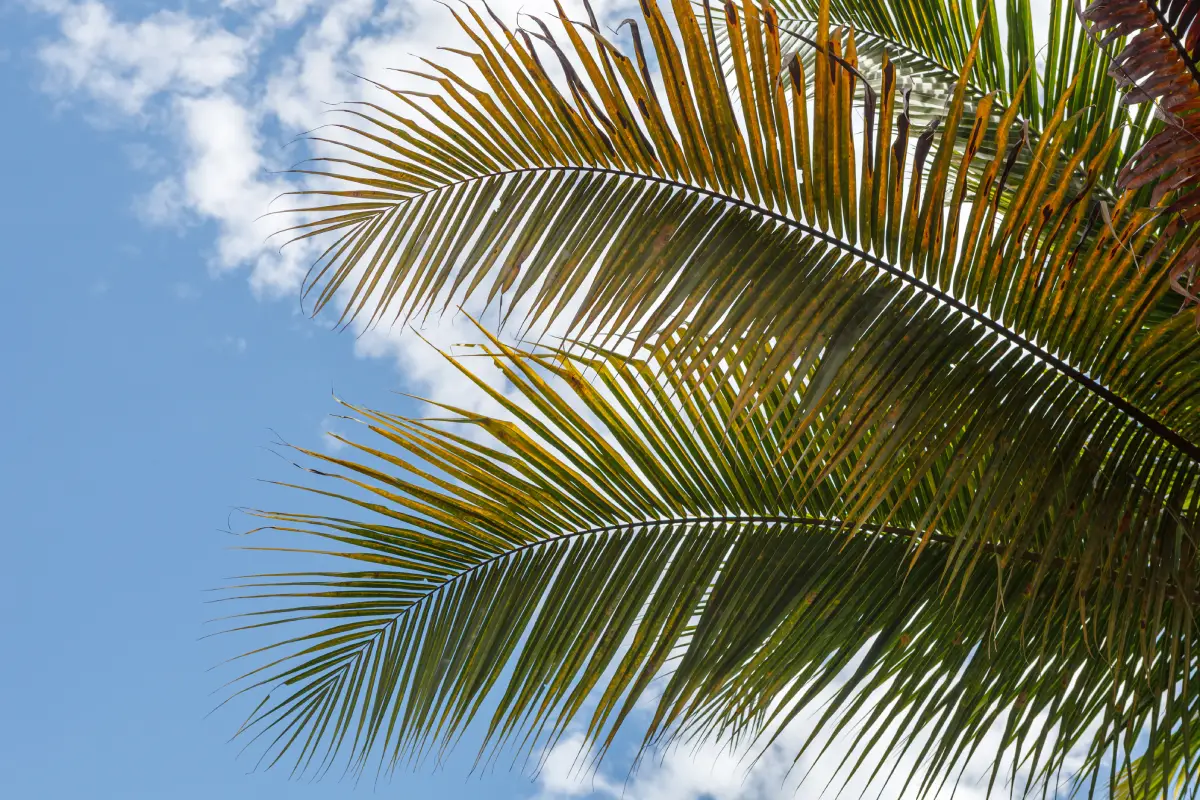
Brown palm fronds can be caused by something as simple as natural aging or by problems involving nutrients, water, pests, or disease. The location of the browning and which fronds are affected can provide important clues about what may be stressing the palm.
For South Florida palms, some of the most common causes of browning include:
- Natural Aging: Older, lower fronds naturally decline as new growth develops at the center of the palm.
- Nutrient Deficiencies: Potassium, magnesium, manganese, and other nutrient problems can cause yellowing, spotting, browning, or distorted growth.
- Water Stress: Too much or too little water can affect root health and contribute to declining foliage.
- Cold Injury: Some palm species may develop brown or damaged foliage after unusually cold weather.
- Pests or Disease: Insects and palm diseases can cause discoloration, wilting, or other changes to the canopy.
Identifying where the symptoms appear and how they progress is the first step toward determining why your palm fronds are turning brown.
5 Reasons Palm Tree Fronds Turn Brown
Palms respond to different types of stress in different ways. Looking at whether the oldest leaves, newest growth, or entire canopy is affected can help narrow down the cause.
1. Normal Palm Frond Aging
Not every brown frond indicates a problem. As palms produce new leaves from the center of the canopy, older lower fronds naturally age and eventually turn brown.
Completely dead or brown fronds may be pruned when appropriate, but healthy green leaves should generally remain in place because excessive pruning can contribute to palm stress.
2. Nutrient Deficiencies
Florida’s sandy soils can lose nutrients through leaching, making proper palm fertilization especially important. Different deficiencies often produce different patterns of discoloration.
- Potassium Deficiency: Symptoms usually begin on older leaves and may include yellow or orange spotting, brown or dead leaflet tips, and increasingly frizzled foliage as the deficiency becomes more severe.
- Magnesium Deficiency: Older leaves may develop broad yellow bands along the margins while the center of the leaf remains greener.
- Manganese Deficiency: Often called “frizzle top,” manganese deficiency affects newer growth, causing leaves to emerge small, weak, distorted, or necrotic.
3. Improper Irrigation or Drainage
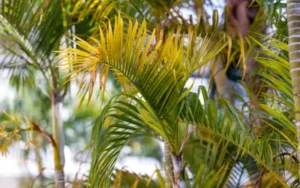
Both drought and excessive moisture can stress palms. Poor drainage or consistently saturated soil can interfere with root function, while prolonged dry conditions can cause foliage to decline.
If browning appears alongside standing water, chronically dry soil, or other signs of irrigation problems, correcting the underlying moisture issue may be an important part of restoring palm health.
4. Cold Damage
Although South Florida generally has a warm climate, unusually cool or freezing temperatures can damage sensitive palm species. Cold injury may cause discoloration, spotting, or dead areas on affected fronds.
The severity of cold damage depends heavily on the palm species, temperature, and length of exposure. Avoid removing foliage that still contains healthy green tissue while the palm is recovering.
5. Palm Pests and Diseases
Some palm pests and diseases can also cause browning, wilting, or declining foliage. The symptoms often depend on the pest or disease involved.
- Palmetto Weevils: These large weevils can seriously damage certain palms, particularly stressed or recently transplanted trees. Damage near the growing point may eventually cause the crown or spear leaf to decline.
- Scale Insects and Other Sap-Feeding Pests: Sap-feeding insects may cause yellowing, reduced vigor, or other visible stress on affected palms.
- Ganoderma Butt Rot: This fungal disease causes internal trunk decay. Symptoms may include wilting or increasing numbers of dead lower leaves, and a shelf-like fungal conk may eventually appear near the base of the trunk.
- Lethal Bronzing: Depending on the palm species, symptoms may include premature fruit drop, dead flower stalks, discoloration of older leaves, and eventual collapse of the spear leaf.
Because nutritional problems, environmental stress, pests, and diseases can produce similar symptoms, accurate diagnosis is important before treatment begins.
FAQs About Brown Palm Fronds
Professional Palm Tree Care in South Florida
If your palm fronds are turning brown and you’re not sure why, Petri Pest Control Services, Inc. can evaluate the condition of your palms and identify potential nutrient, pest, or disease concerns.
Our palm tree care services are available throughout Broward & Palm Beach Counties, FL and include customized recommendations based on the palm species and conditions found on your property.
Contact Petri Pest Control today to request a free estimate.
Looking for help with more of your landscape? Petri also provides professional shrub care and lawn care services throughout South Florida.
Back to Lawn & Shrub Care